



 Home
Home
IEC
IES-5000 Substation Control and Monitoring System
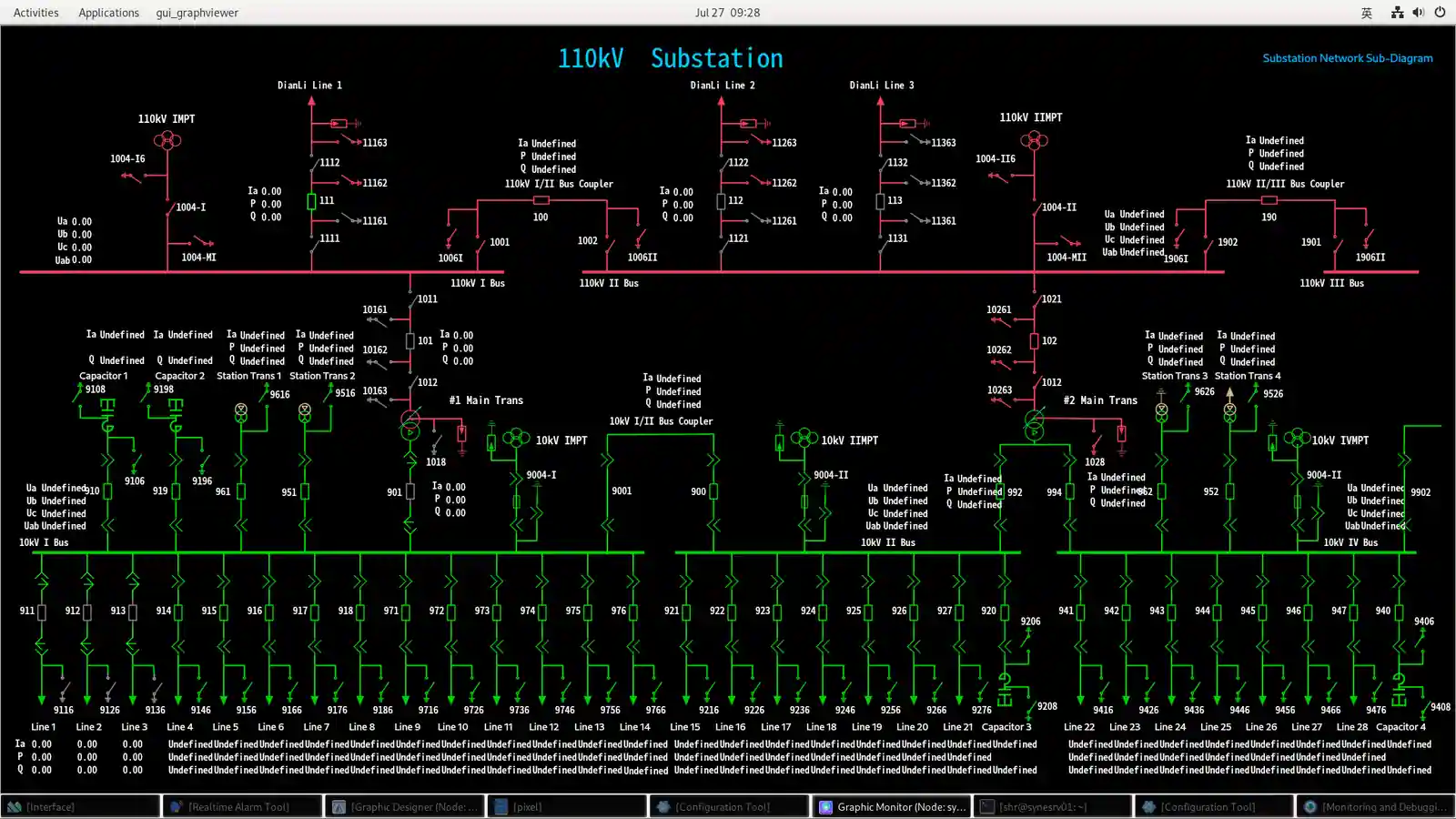
Based on the IES-5000 Substation Control and Monitoring System, which is developed on the Nebula flexible heterogeneous platform, it fully complies with IEC/IEEE standards and supports Windows and Linux operating systems. The system adopts a flexible hybrid integrated architecture, enabling elastic hardware deployment and modular application design. It features high-speed real-time data acquisition and access capabilities at the ten-million-point level. The system supports native multi-language adaptation and offers high engineering service customization capabilities, allowing it to flexibly meet diverse requirements in overseas regions regarding environmental conditions, grid standard differences, and linguistic and cultural disparities. It comprehensively covers all monitoring scenarios for overseas substations.
-
Elastic Scalability
-
Engineered to Global Standards
-
Integrated Security and Resilience
-
Intelligent Operation and Maintenance
Product Highlights

Elastic Scalability
The system adopts a modular, scalable architecture design, supporting flexible deployment of 1 to 128 nodes and handling over 10 million data points for access and processing, covering the full spectrum from small substations to large regional control centers. Through multi-network redundancy, service backup, and intelligent diagnostic mechanisms, it effectively ensures system continuity and reliability, helping customers transition from "reactive response" to "predictive operations" in their maintenance model.

Engineered to Global Standards
The system fully complies with international standards including IEC 61850, IEC 60870, and IEEE, and supports Windows and Linux operating systems, offering rapid international adaptation capabilities. Built-in multi-language support enables one-click switching between Chinese, English, Russian, French, Spanish, Arabic, and more, covering all modules including menus, alarms, reports, and operation tickets, without requiring redevelopment for different language environments.

Integrated Security and Resilience
The system provides comprehensive underlying support for both general security and operational security. Through multi-network mutual backup, service redundancy, and intelligent status awareness, the system delivers high-reliability automatic recovery capabilities, ensuring critical services remain uninterrupted and fully operational, thereby enhancing the security and availability of grid assets.

Intelligent Operation and Maintenance
The system features a built-in intelligent diagnosis and fault warning engine that monitors substation equipment, communication links, and system resources in real time. Through visualized topology and alarm correlation analysis, it helps operators quickly locate fault root causes. It also supports remote browsing, remote maintenance, and multi-level dispatch coordination, reducing on-site inspection frequency, lowering operational costs, and improving response efficiency.
Technical Specification
Elastic Scalability
Supports flexible expansion from 1 to 128 nodes.
Massive Data Processing
Capable of accessing and processing over 5 million data points.
High-Performance Networking
Meets requirements for high message throughput on 100M networks (1KB messages ≥ 8,000 pps) and high bandwidth on Gigabit networks (≥ 80 MB/s), with support for multi-network redundancy.
High-Reliability Operation
Supports multi-network mutual backup/load balancing, service active/standby redundancy, intelligent status awareness, and fault diagnosis, ensuring continuous and stable operation.
Screen Full-Page Call Response Time
real-time screen: 0.42s (≤ 1s); Other screens: 0.58s (≤ 2s)
Screen Data Refresh Time
0.81s(≤1s)
Tele-Indication Change Transmission Time
0.94s(≤1s)
Telemetry Response Time for Primary Equipment
0.55s(≤2s)
Tele-Indication Response Time for Primary Equipment:
0.39s(≤1s)
Control Response Time for Primary Equipment:
0.14s(≤1s)