



 Home
Home


1. What Is an E-House?
An E-House, also known as a prefabricated power module or Power Distribution Center (PDC), is a factory-built modular electrical building that houses and integrates electrical equipment for power distribution, protection, control, and monitoring.
Depending on the project design, an E-House can accommodate equipment such as switchgear, gas-insulated switchgear (GIS), protection and control panels, power quality equipment, and associated electrical systems. Transformers and other major equipment may be included in the overall solution, either within the module or as external equipment, depending on their size, configuration, and installation requirements. Supporting facilities may include lighting, heating, ventilation and air conditioning (HVAC), fire detection and protection, and other building services.
Unlike conventional installations that rely heavily on on-site construction and equipment integration, an E-House allows much of the equipment installation, internal wiring, system integration, and testing to be completed in the factory. The completed module is then transported to site, positioned on a prepared foundation, and connected to external electrical and control systems.
This approach helps simplify site installation and coordinate equipment integration before delivery.
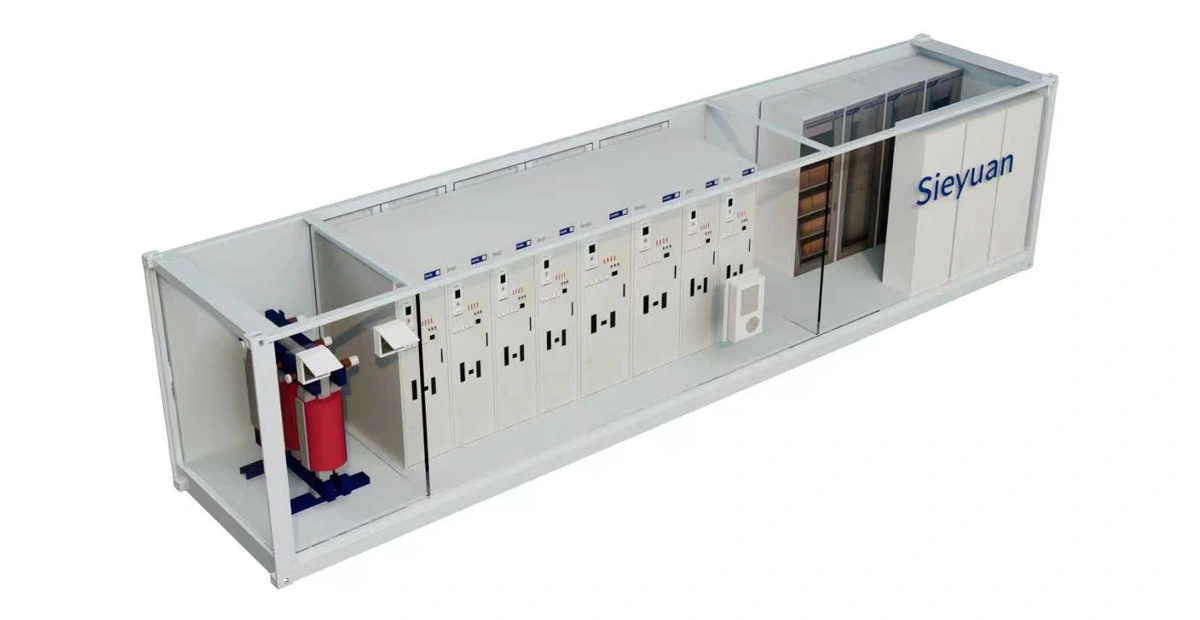
Inside an E-House: electrical equipment is installed, wired, and tested in the factory before the module ships.
2. E-House Applications
E-Houses are used in projects that require integrated electrical systems, efficient space utilization, and reduced on-site construction work. Typical applications include:
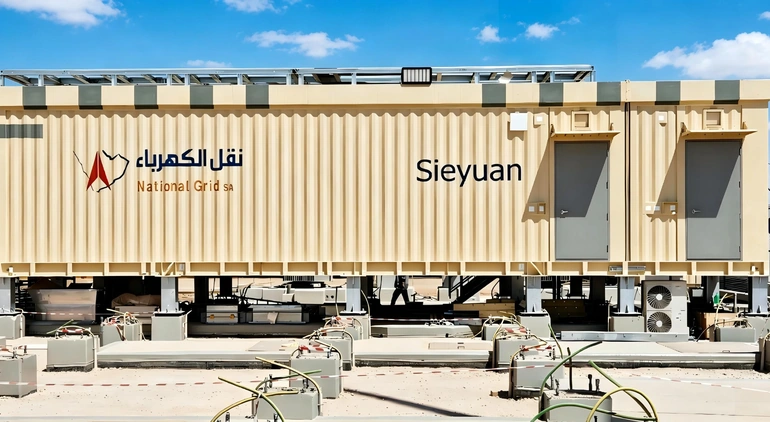
Power generation and grid infrastructure
Substations, transmission and distribution facilities, and grid modernization projects.
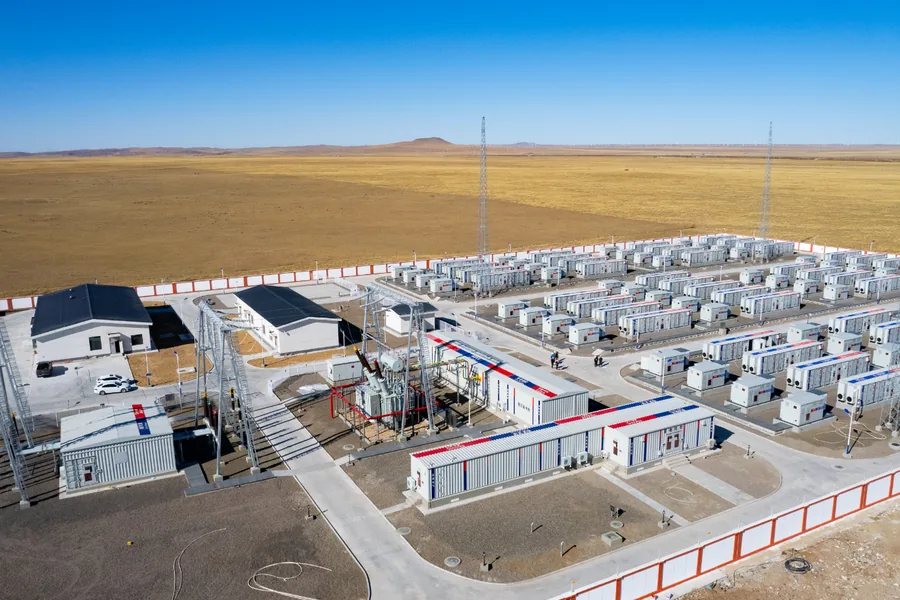
Renewable energy and energy storage
Solar and wind power plants and battery energy storage systems (BESS).
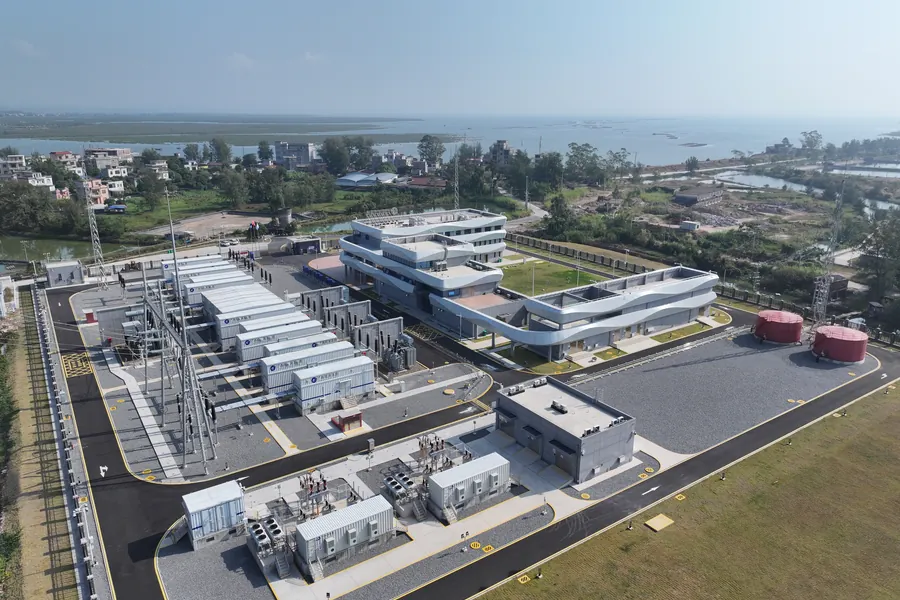
Oil and gas and chemical industries
Oil and gas facilities, petrochemical plants, and chemical processing facilities.
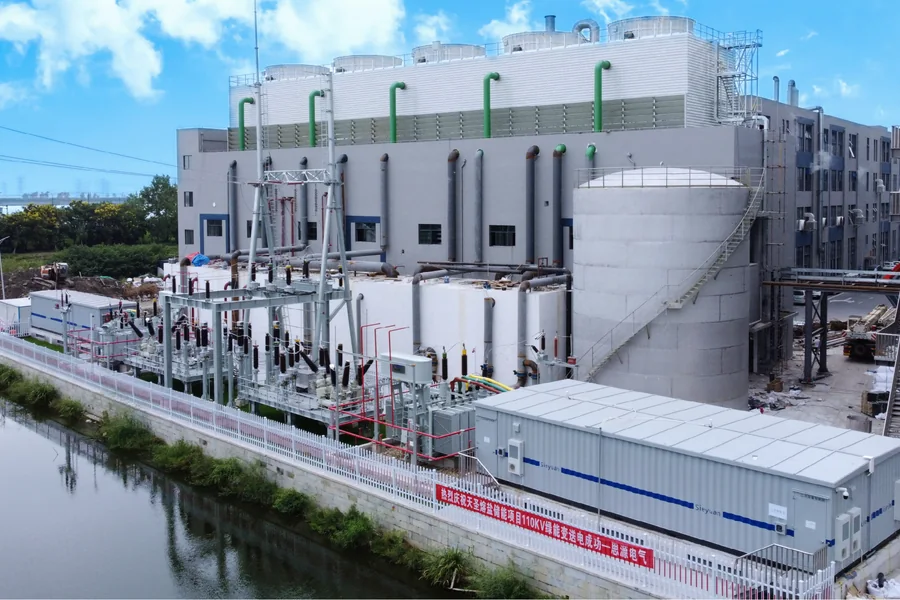
Mining and industrial facilities
Mining operations, metals processing, and large industrial plants.
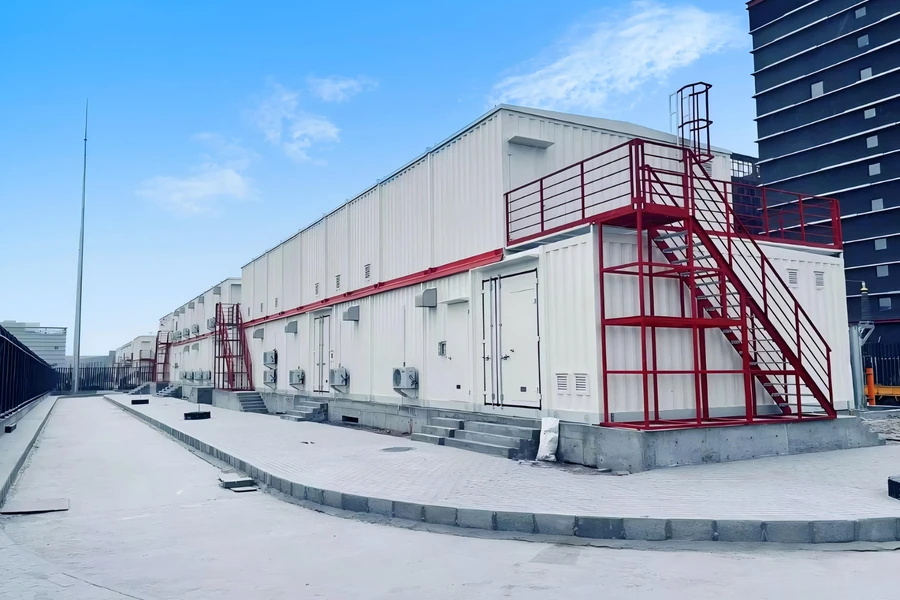
Data centers and infrastructure
Data centers, rail transit, and other facilities requiring integrated power distribution systems.
E-Houses can be used for both new installations and existing facility upgrades, particularly where construction space is limited, environmental conditions are demanding, or project schedules require careful coordination of on-site activities.
3. E-House vs. Conventional On-Site Construction
The main difference between an E-House and a conventional site-built electrical installation lies in where equipment integration and construction work take place.
| Comparison | E-House | Conventional on-site construction |
|---|---|---|
| Construction approach | Factory prefabrication and modular integration | More construction and integration work performed on site |
| Equipment integration | Internal equipment and wiring can be integrated before delivery | Equipment installation and wiring are largely coordinated at site |
| Site activities | Primarily positioning, external connections, and required site testing | May involve more extensive building construction and equipment installation |
| Project coordination | Factory work and site preparation can proceed in parallel | Work sequencing may depend more heavily on site construction progress |
| Transportation | Requires transport and lifting arrangements for prefabricated modules | Equipment and construction materials are transported separately as required |
The actual differences depend on the project design, equipment configuration, scope of supply, and site conditions. An E-House is not necessarily the preferred option for every installation; the choice should be based on technical requirements and overall project economics.
4. Advantages of E-Houses
Compact Design
An E-House integrates electrical equipment within a purpose-designed modular structure, helping make efficient use of available space. Depending on the layout, it can reduce the need for separate equipment buildings and support installations in space-constrained industrial facilities.
Shorter On-Site Construction Time
Factory installation, internal wiring, and testing reduce the amount of work that must be completed after delivery. Site activities can focus on foundation preparation, module positioning, external connections, and commissioning. Factory manufacturing and site preparation may also proceed in parallel, helping improve schedule predictability.
Quality and Cost Control
Factory-based integration provides a controlled environment for equipment installation, wiring, and testing. It can help improve process consistency and reduce certain on-site labor and construction requirements.
However, the overall cost depends on factors such as module dimensions, transportation, lifting, foundation design, environmental protection, and maintenance requirements. These factors should be evaluated when comparing an E-House with alternative installation approaches.
5. Sieyuan Electric E-House Solutions
Sieyuan Electric provides E-House solutions that combine modular design with the integration of electrical equipment and supporting systems.
Integrated Equipment Portfolio
Sieyuan Electric's electrical equipment portfolio includes GIS, power transformers, protection and automation systems, SVG systems, and medium- and low-voltage switchgear. Depending on the project scope, these products can be integrated into a single E-House or a coordinated group of modules.
Engineering and Customization
E-House configurations can be developed according to equipment dimensions, electrical requirements, transportation constraints, and site conditions. Structural design, thermal management, environmental protection, and corrosion protection can be addressed as required by the project.
These considerations are particularly relevant to installations exposed to high or low ambient temperatures, high humidity, dust, salt-laden atmospheres, and other demanding operating environments. The specific design measures depend on the environmental conditions and technical specifications of each project.
Project Delivery Support
Depending on the contracted scope, services can cover:
Step 1
Solution development
Step 2
Engineering design
Step 3
Equipment integration and manufacturing
Step 4
Factory testing
Step 5
Transportation coordination
Step 6
Site installation support
Step 7
Commissioning
Operation and maintenance services may also be included where required.
Sieyuan Electric's approach focuses on coordinating equipment integration and engineering requirements to simplify site interfaces and support predictable project execution.
6. Conclusion
E-Houses provide a modular approach to electrical system integration by moving a substantial portion of equipment installation and testing into the factory. They can be particularly suitable for projects with space constraints, demanding site conditions, or tight construction schedules.
The right solution depends on equipment requirements, transportation and installation constraints, environmental conditions, and overall project economics. By combining electrical equipment integration with project-specific engineering, Sieyuan Electric supports E-House applications across power infrastructure, renewable energy, energy storage, and industrial facilities.
Talk to us about your E-House projectSee prefabricated substations