


 Home


Every day, you unconsciously perform hundreds of switching operations. You flip a wall switch and the light comes on. You switch on a hairdryer: it delivers hot air, and cuts off automatically once it overheats. You open the refrigerator door and the interior light comes on, then goes off again as the door closes.
Behind all of these everyday actions there is one core component: the switch. A switch works much like a water tap. The tap controls the flow of water; the switch controls the flow of current, making and breaking the circuit.
Now imagine scaling that capability up tens of thousands of times. Current travels from a household socket, through the distribution board, and across thousands of kilometres to reach an extra-high-voltage transmission line. What has to be interrupted here is no longer a few amperes of household current, but thousands of amperes at hundreds of thousands of volts — enough to power an entire city. An ordinary switch cannot withstand such conditions: the instant of interruption produces a violent high-temperature arc, and the high voltage can even break down the air and destroy the switchgear.
This is where the high-voltage circuit breaker comes in — the core primary equipment for high-power transmission and rapid fault clearance. It is the super switch of the power grid: it conducts current stably in normal operation; when an overload, short circuit or earth fault occurs on the line, protection relays issue a trip command and the circuit breaker isolates the fault within tens of milliseconds, safeguarding the main grid, energy bases and critical infrastructure.
1. What is a Dead-Tank Circuit Breaker?
As the power industry has grown and switching technology has evolved, high-voltage switchgear has diversified into a range of product forms to suit different technical approaches, application environments and voltage levels. At 38 kV and above, high-voltage switching equipment is available in different configurations, including air-insulated switchgear (AIS), gas-insulated switchgear (GIS) and hybrid gas-insulated switchgear (HGIS). Circuit breakers can also be classified by their tank configuration into dead-tank circuit breakers (DTCB) and live-tank circuit breakers (LTCB). Each configuration has its own strengths and its own role, and together they form the safety backbone of high-voltage grids.
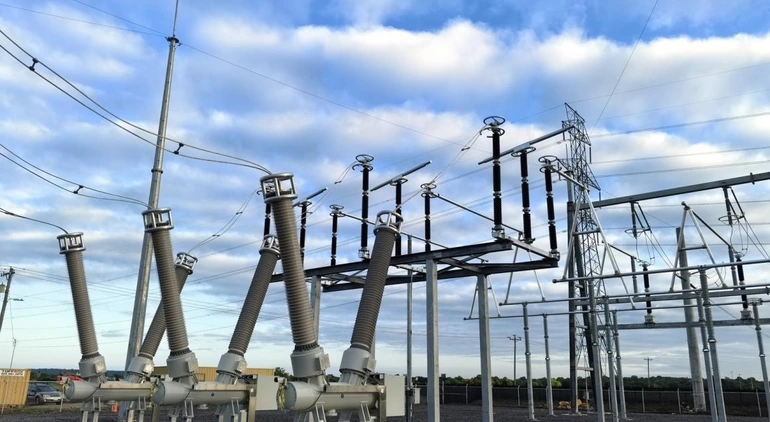
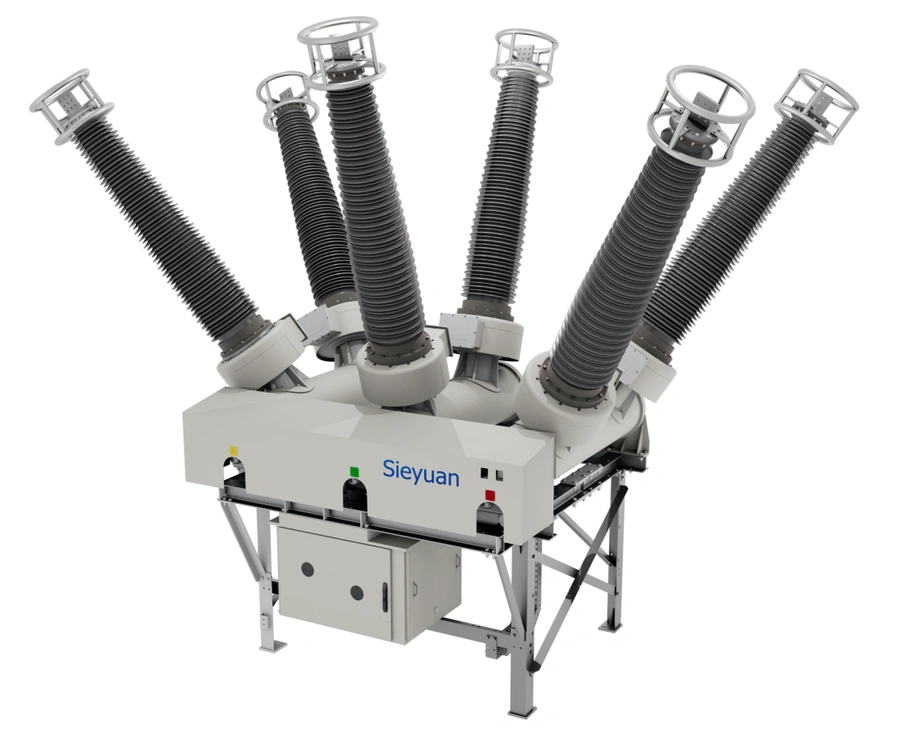
The dead-tank circuit breaker combines a compact structure, high reliability and easy installation and maintenance. Its earthed metal tank provides an earthed enclosure for the internal interrupting components. This design helps enhance personnel safety and reduces exposure to energised internal components during operation and maintenance. It is widely recognised as the backbone of the North American grid. A dead-tank circuit breaker looks like this:
2. Typical Applications of Dead-Tank Circuit Breakers
The dead-tank circuit breaker is not a general-purpose transmission and distribution device; it is a core high-voltage main-grid product developed for high-reliability, severe-duty, high-capacity power scenarios. Its interrupter chamber is enclosed in an earthed metal tank, and current transformers for protection and metering can be integrated. With good seismic performance, strong resistance to pollution and reliable sealing, it is suitable for applications where space is limited and conditions are harsh.
Its main applications include:
Regional main transmission grids — carrying and reliably interrupting large-capacity power flows between regions;
Large nuclear, hydro and thermal power bases — ensuring reliable grid connection of high-capacity generating units;
New-type energy storage and pumped-storage power stations — supporting peak shaving and frequency regulation, and the flexible, reliable integration of large-scale renewable energy;
Step-up substations for large wind and solar bases — accommodating the safe transmission and transformation of intermittent, highly variable power;
Large data centres — supporting dual-supply redundancy and a near-uninterruptible power supply;
Electrified railway traction substations — ensuring high-frequency, uninterrupted supply to traction loads;
Industrial power for metallurgy, petrochemicals and similar sectors — meeting the strict reliability requirements of continuous production.
Under complex and severe conditions the dead-tank circuit breaker also demonstrates strong environmental adaptability, addressing the pain points of each scenario:
High-altitude areas: optimised insulation structures and corrected gas-pressure matching parameters resolve insulation degradation at low air pressure;
Coastal areas with heavy salt fog and heavily polluted industrial areas: anti-corrosion tank bodies and reinforced external insulation resist corrosion and creepage;
Areas of high seismic intensity: the rigid, low-centre-of-gravity tank structure is designed to meet specified seismic requirements and to resist shock and deformation, supporting stable operation under severe conditions;
Low-temperature regions: low-temperature-resistant sealing materials and lubricants are used, gas density is compensated for low ambient temperatures or a gas mixture with a lower liquefaction temperature is adopted, and heaters and thermal insulation are provided for the control cabinet and mechanism box, so that reliable operation is maintained at low ambient temperatures.
In scenarios where supply reliability requirements are extremely demanding — dual-supply redundancy in data centres, large-scale renewable integration — the dead-tank circuit breaker, with its stable interruption performance, low failure rate and long maintenance-free intervals, is key equipment supporting supply reliability for critical loads.
3. Why Are Dead-Tank Circuit Breakers Widely Used in North America?
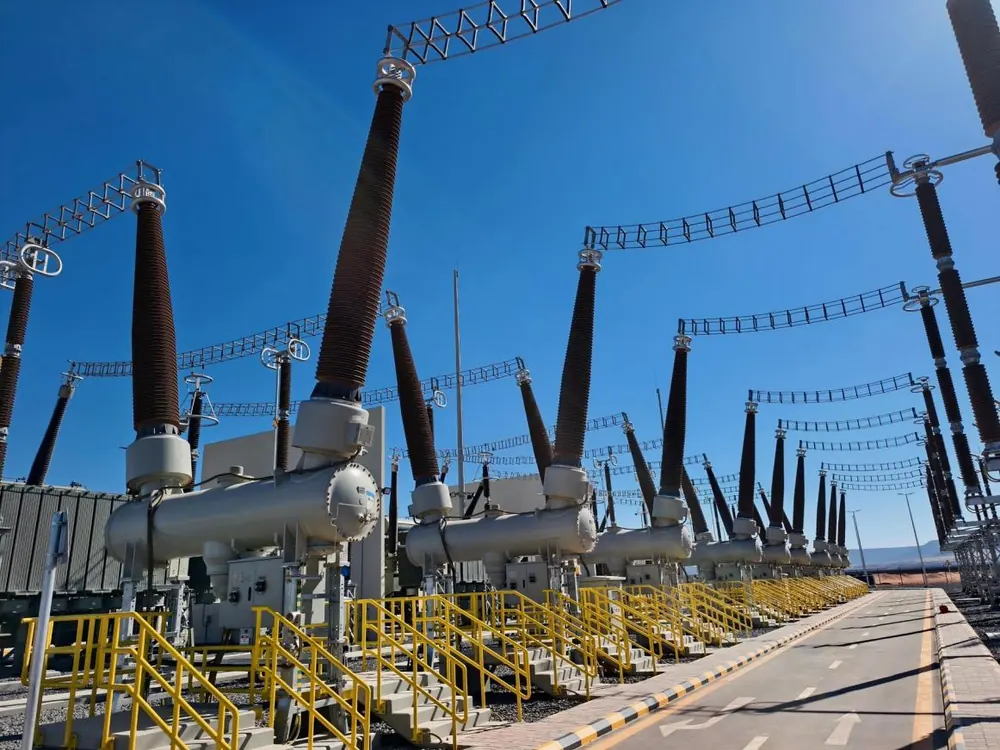
Dead-tank circuit breakers are widely used on the North American grid, where rated voltages concentrate in the 72.5 kV–550 kV range and the insulation across the interrupter gap is stable and unaffected by external environmental factors. This is the combined result of historical technology paths, main-grid topology requirements, operation and maintenance (O&M) safety, environmental adaptability and the existing industry ecosystem.
First, the historical technology path is entrenched. High-voltage circuit breaker technology in North America originated from the oil-immersed earthed-tank design and developed under the ANSI/IEEE standards system, forming a complete set of design, construction and testing practices that established dead-tank equipment as the mainstream.
Second, main-grid topology creates a hard requirement. North American transmission grids commonly use breaker-and-a-half and ring-bus arrangements, which require CTs on both sides of the breaker for differential and breaker-failure protection. A dead-tank circuit breaker can integrate bushing-type CTs, giving a simplified structure, compact layout and good economics; an LTCB requires external stand-alone CTs, which means greater equipment redundancy and a more complex layout, and does not suit the mainstream North American arrangement.
Third, the O&M safety advantages are pronounced. The metal enclosure is earthed throughout and the internal live parts are enclosed, so O&M personnel can carry out inspection and maintenance from ground level, greatly reducing the risks of work at height and live-line work — in line with the strict safety management requirements of the North American grid.
Fourth, environmental adaptability is broader. The United States spans a vast territory with markedly different conditions: earthquakes and salt fog on the West Coast, wind-blown sand and extreme temperature swings in the centre, and severe pollution in the eastern industrial belt. With its low centre of gravity and seismic-resistant design, plus a fully enclosed tank that resists pollution, corrosion and condensation, the dead-tank circuit breaker adapts to all these varied operating environments.
Fifth, the installed base creates technology lock-in. North American equipment supply chains, O&M procedures, test standards and spare-parts systems have long been built around dead-tank equipment; personnel are experienced and utilities follow well-established equipment selection practices, forming a stable technology path dependency.
4. DTCB vs. LTCB, GIS and HGIS: Core Technical Comparison
| Comparison Criteria | Dead-Tank Circuit Breaker (DTCB) | Live-Tank Circuit Breaker (LTCB) | Gas-Insulated Switchgear (GIS) | Hybrid Gas-Insulated Switchgear (HGIS) |
|---|---|---|---|---|
| CT configuration | Bushing-type CTs integrated in the tank; no separate stand-alone CTs required | External stand-alone CTs required | CTs integrated in the enclosed structure | CTs integrated in the enclosed structure |
| Insulation | Interrupter enclosed in an earthed metal tank; the tank itself is directly earthed | Interrupter mounted atop an insulating support column, which provides insulation to earth | All primary components enclosed in an earthed metal enclosure with full SF₆ insulation | Breaker, disconnectors and earthing switches in enclosed structures; open-type bushings on the outgoing side |
| Seismic performance | Low centre of gravity, rigid integral tank; designed to meet specified seismic requirements | Mature structure; project seismic requirements met by optimising column and frame design | Integral enclosed and compact; seismic design adapted to project requirements | All units enclosed except the outgoing unit; seismic performance meets specified requirements |
| Environmental adaptability | Bushing creepage distance selected according to site pollution level; designed for polluted, salt-fog and sandy environments | Mature external insulation design; creepage distance selected according to site pollution level | Essentially unaffected by the external environment; suited to underground stations, offshore platforms and other severe sites | Core primary equipment isolated from external pollution; good environmental adaptability |
| Footprint | Integrated bushing-type CTs; compact layout compared with an equivalent AIS arrangement | Largest overall footprint once AIS equipment such as disconnectors and CTs is included | Smallest footprint; significant land savings | Between GIS and AIS |
| Standards and market application | Widely applied in North American IEEE-based markets; products can be designed and tested to IEC or IEEE standards as required by the project | Widely applied in Europe and parts of Asia, where IEC standards are commonly used; applicable standards are determined by product design and project requirements | Applied worldwide; products can comply with IEC or IEEE standards according to project requirements | Widely applied in Europe and Latin America; a mainstream choice for mobile substations and fast-delivery projects such as North American data centres |
| O&M requirements | Long maintenance-free intervals; relatively low inspection and maintenance requirements | Straightforward structure; external components easy to inspect and service | Modular integrated design; maintenance requires specialised procedures and equipment | Combines enclosed equipment with open components; flexible O&M approach |
| Life-cycle cost (LCC) | Moderate initial investment; low whole-life O&M cost where long maintenance-free intervals are realised; LCC advantage depends on site conditions such as seismic and salt-fog exposure | Lower equipment purchase cost; CTs, support structures, civil works and external-insulation maintenance add to whole-life spend | High initial investment; long maintenance intervals; LCC depends on land cost, site constraints and maintenance strategy | Initial investment between DTCB and GIS; balanced land use and O&M; LCC depends on project scope and configuration |
Note: Equipment selection depends on multiple factors, including technical requirements, site conditions, reliability, regulatory requirements and life-cycle costs.
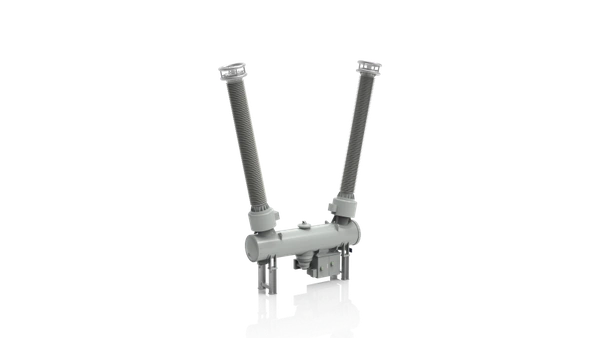 DTCB
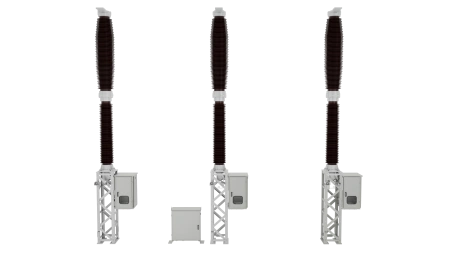 LTCB
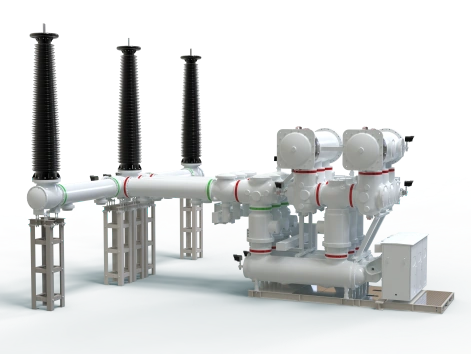 GIS
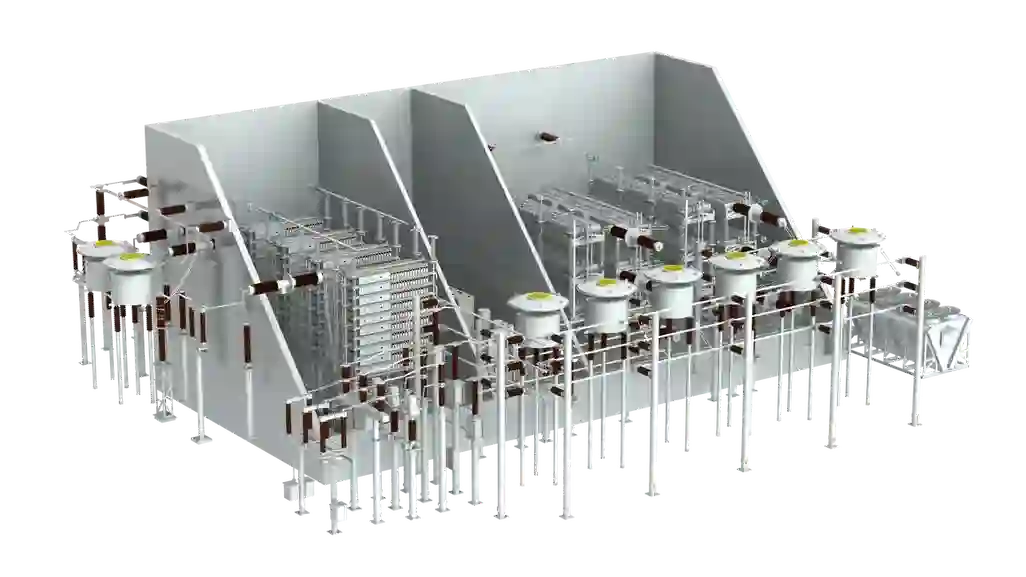
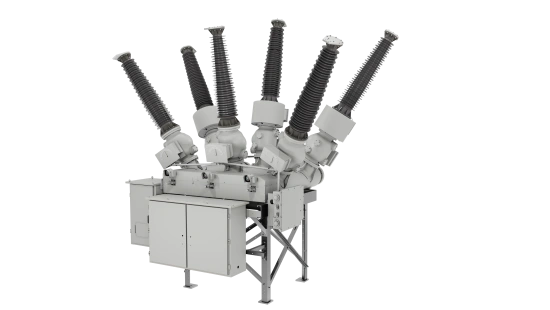 HGIS(T)
5. Technology Trends in Dead-Tank Circuit Breakers
The vast majority of existing high-voltage dead-tank circuit breakers use SF₆ technology, and both the product technology and the supply chain are relatively mature. Environmental performance, digitalisation and intelligence are the industry's core development directions, alongside continued evolution towards higher capacity, more efficient project execution and highly reliable, precise operation. The main trends are:
(1) Environmental performance: conventional DTCBs use SF₆ as the arc-quenching and insulating medium, which has a high global warming potential. The industry is focusing on low-GWP gas mixtures, dry air and SF₆-free vacuum alternatives, while improving tank sealing and adding gas monitoring and recovery processes to reduce leakage and carbon emissions and meet grid decarbonisation requirements.
(2) Intelligence: sensing and digital technologies are used for online monitoring of gas temperature and pressure, moisture, partial discharge, mechanical travel, coil current, vibration and even the electrical life of the switch. Data analysis enables fault warning and life assessment, moving O&M from scheduled to condition-based maintenance and supporting digital substations.
(3) Higher capacity: grid expansion and renewable energy export continue to raise system short-circuit capacity. By optimising the flow field, electric field and heat-dissipation structure of the interrupter, rated current, short-circuit breaking and short-time withstand capability are increased while size and weight are controlled, meeting the demands of large grids and close-in faults.
(4) Modular, integrated design: the interrupter, integrated CTs, bushings and other core components are pre-assembled and integrated at the factory, so the product can be shipped as a complete unit. Secondary control circuits are also being digitalised, with integrated intelligent control components simplifying the logic circuits, reducing conventional contactor-type devices and cutting on-site wiring. This shortens installation and commissioning and enables rapid project delivery for data centres and fast grid upgrades.
(5) Higher reliability and precise operation: for the complex transient conditions of renewable-heavy grids, spring or hydraulic-spring operating mechanisms are optimised and the mechanical transmission simplified, reducing failure probability and extending maintenance-free intervals. Point-on-wave switching technology coordinates circuit breaker operation with the electrical waveform to reduce switching transients, inrush currents and associated disturbances to the power system.
6. Sieyuan's Core Strengths
A complete product range across all voltage levels: high and extra-high voltage dead-tank circuit breakers from 31.5 kV to 800 kV, covering everything from regional grids to UHV supporting projects; compatible with both IEC and IEEE standards for domestic and overseas projects.
Core components manufactured in-house: the interrupter and the operating mechanism are developed and manufactured in-house; the company is also developing SF₆-free high-voltage switchgear technology in response to the grid’s decarbonisation needs.
Deep main-grid engineering track record: batch commissioning on China's main grids, large renewable energy bases and key overseas high-voltage projects, with field operating data continuously fed back into product iteration.
Integrated O&M services covering online monitoring, intelligent condition assessment and diagnosis, and condition-based maintenance of high-voltage equipment. Beyond primary equipment such as circuit breakers, CTs and transformers, the company also supplies power quality management and intelligent O&M hardware and software, connecting equipment supply, monitoring, diagnosis and maintenance into a single whole-life-cycle solution.
The company operates 16 large-scale intelligent manufacturing plants with ample capacity and can provide comprehensive transmission and distribution products and services. Equipment is highly modular and prefabricated, pre-assembled, tested and inspected in the factory to greatly reduce on-site construction time; the company provides end-to-end integrated technical support from scheme design through manufacturing to on-site commissioning.
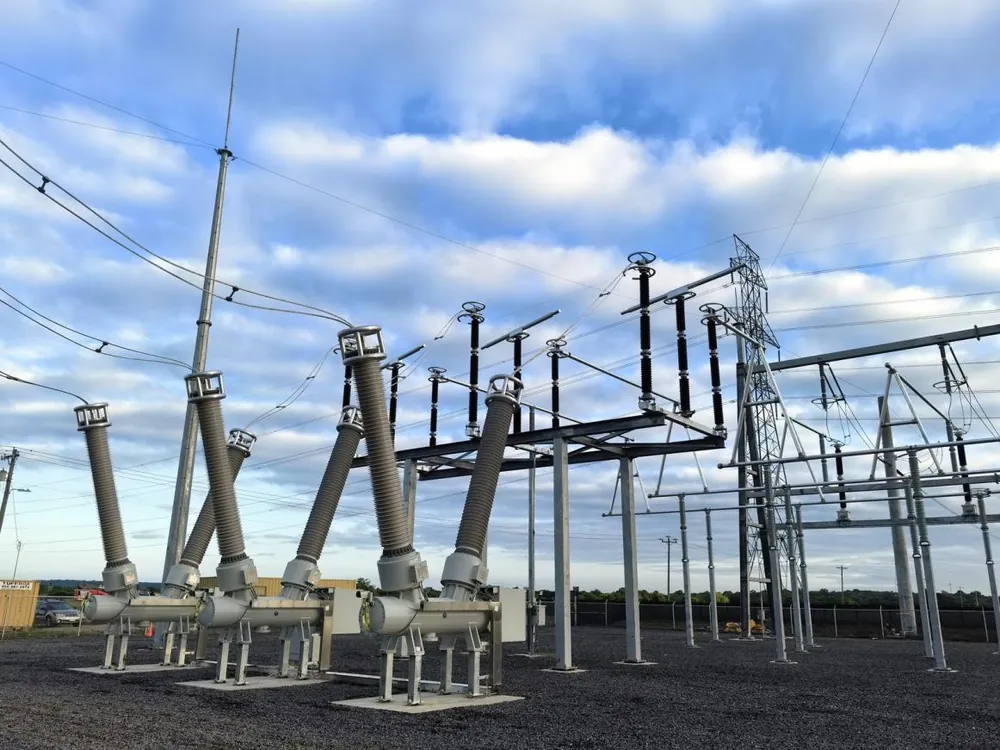
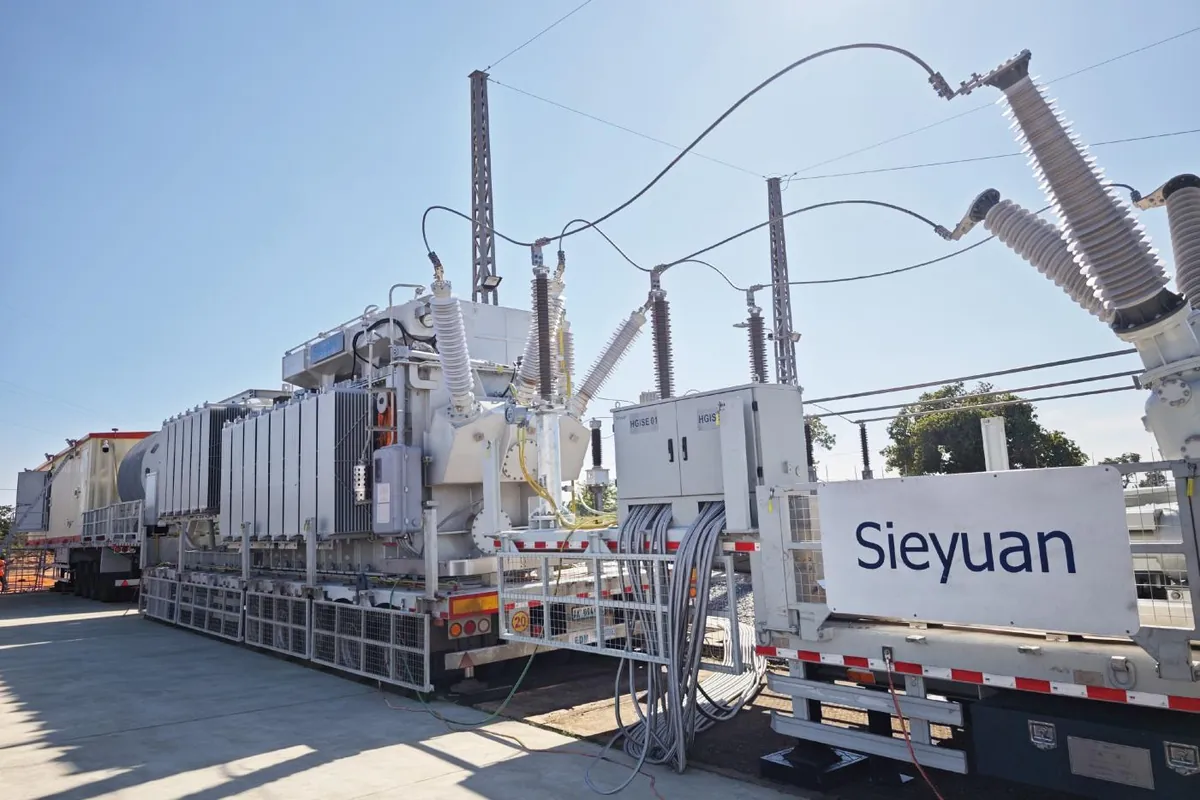
Oklahoma, USA
7. Conclusion
Sieyuan Electric supplies dead-tank circuit breakers as part of an integrated transmission and distribution solution that combines primary equipment with intelligent monitoring. Its DTCB, LTCB, GIS and HGIS product families address the supply reliability requirements of main grids, large energy bases, data centres and electrified railways, supporting the construction of new-type power systems and global decarbonisation.