




 Home


In modern power systems, energy storage is often compared to a large-scale power bank: it stores electricity when supply is available and releases it when needed. As installed renewable energy capacity continues to grow, power grids face increasing challenges related to reduced system inertia, weaker grid conditions, renewable energy integration, and frequency regulation. Against this backdrop, multi-medium grid-forming energy-storage systems are gaining importance for supporting grid stability and improving renewable energy utilization.
This article explores the components, applications, operating principles, and key features of these systems, providing an overview of their role in modern power systems.
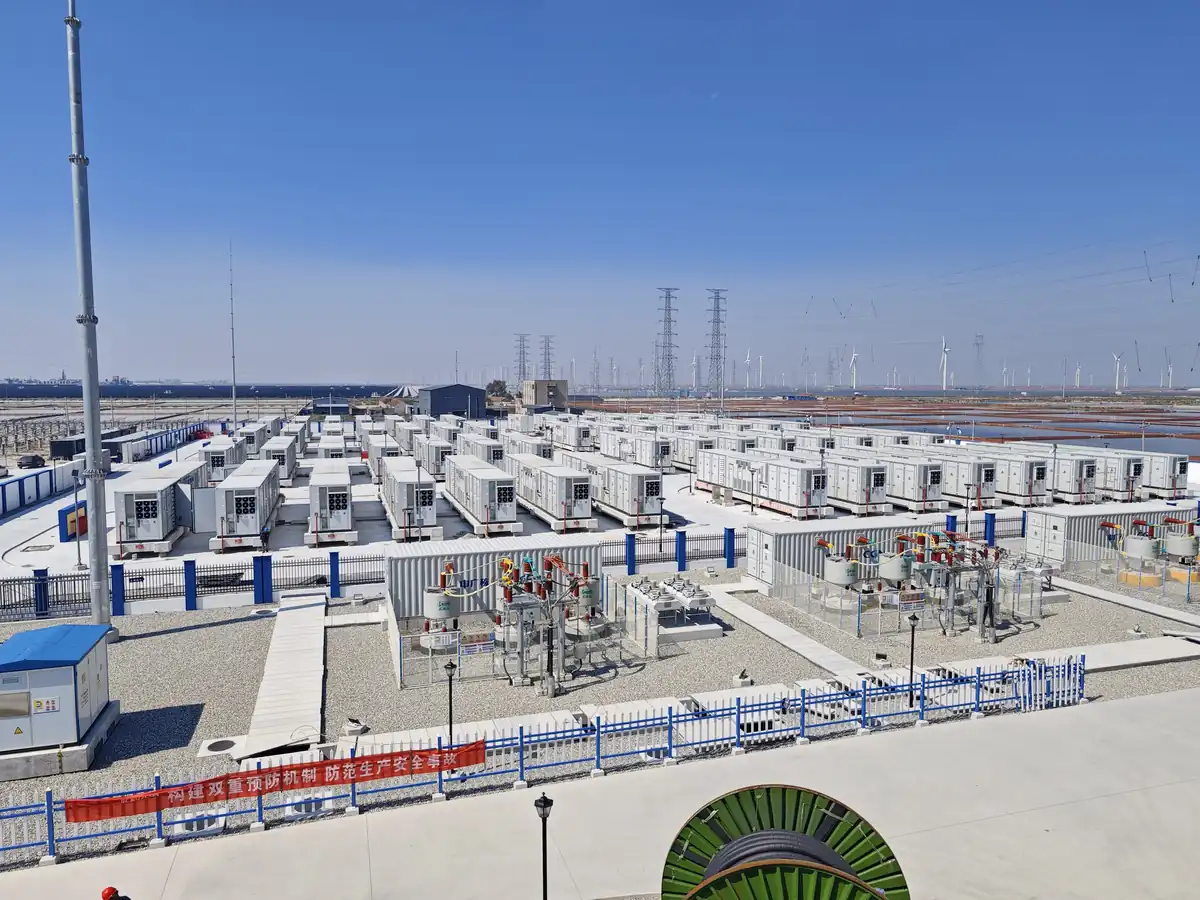
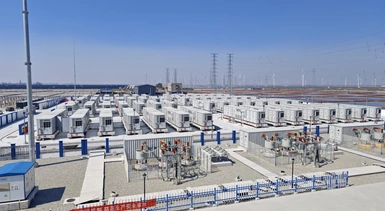
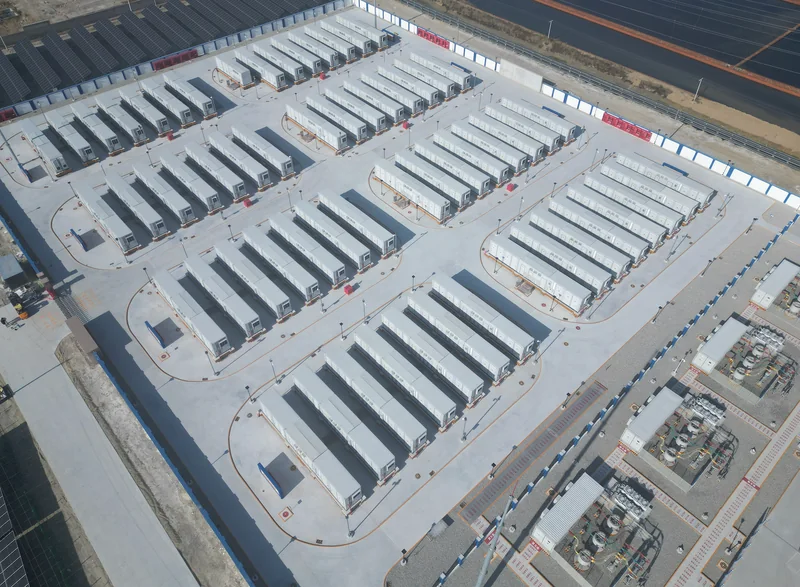
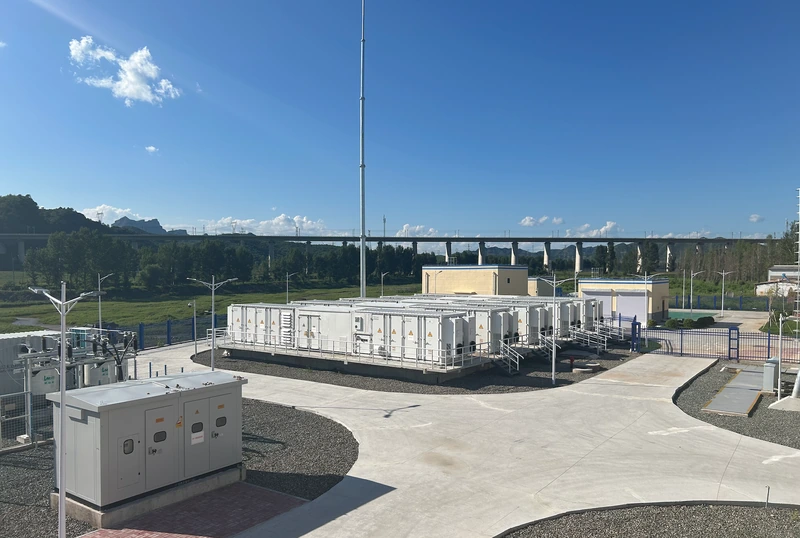
A large-scale energy storage station: rows of containerized storage units alongside the step-up substation.
1. What Is an Energy Storage System and Its Key Components?
An energy-storage system (ESS) is not a single piece of equipment. It is an integrated system that stores, converts, releases, and manages electrical energy. It can be deployed on the grid side, power-generation side, and user side to balance supply and demand, smooth power fluctuations, and support grid operation.
1.1 Energy Storage Technologies
Energy-storage technologies can be classified into different categories according to their energy-storage mechanisms:
Chemical energy storage
Lithium-ion batteries and flow batteries, which store energy through electrochemical reactions.
Mechanical energy storage
Pumped hydro storage and compressed-air energy storage, which store energy in mechanical or potential-energy forms.
Electrical and electromagnetic energy storage
Supercapacitors and other technologies that use physical mechanisms to provide rapid power response.
Different technologies have different characteristics in terms of energy density, power density, response time, and cycle life.
1.2 Main Components of a Large-Scale Energy Storage System
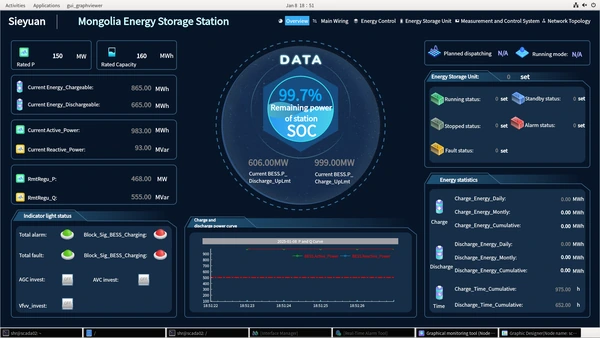
A typical large-scale energy-storage system consists of energy-storage containers, PCS-transformer integrated units, and an Energy Management System (EMS). These components work together to store, convert, and dispatch electrical energy.
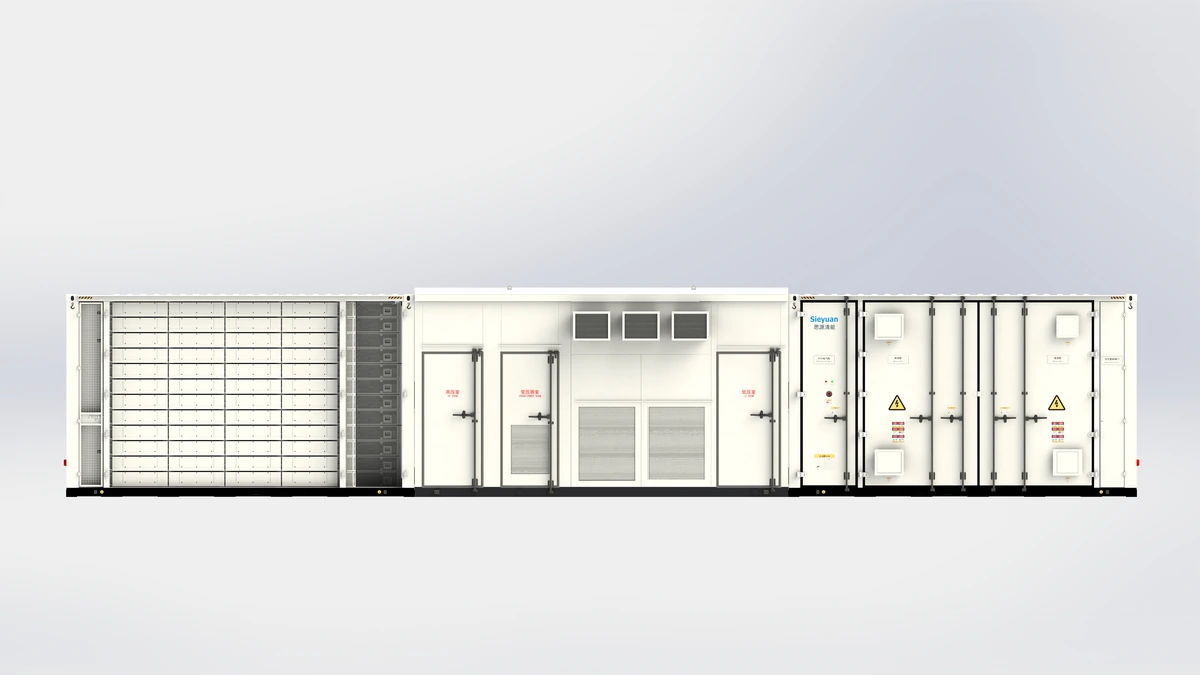
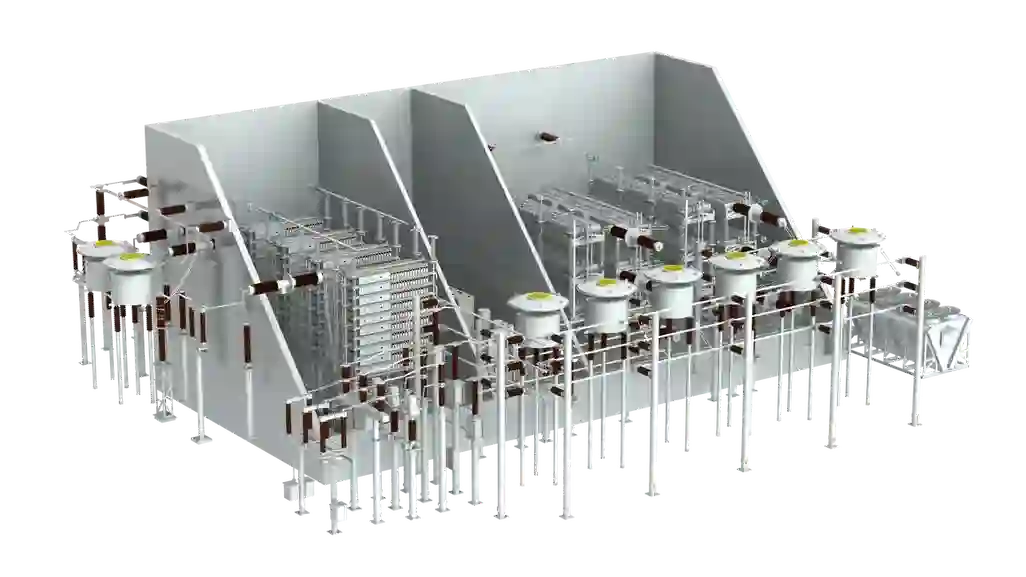
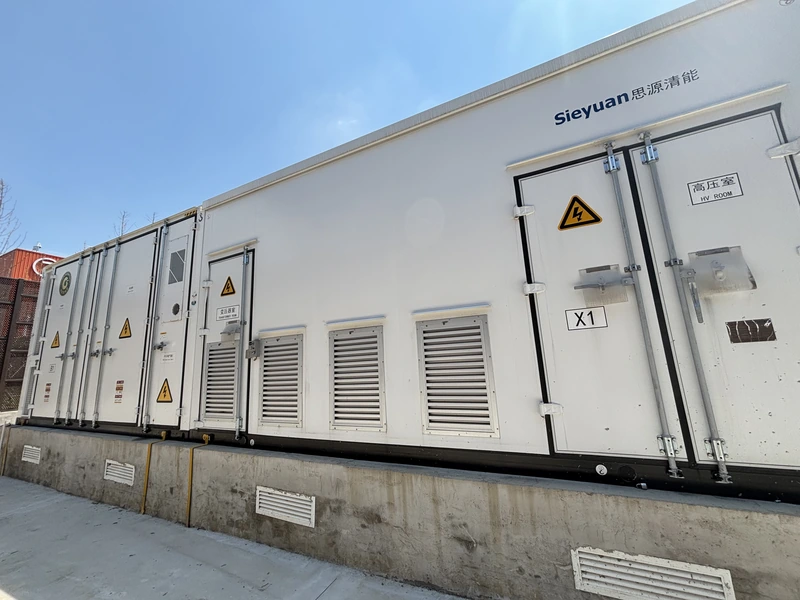
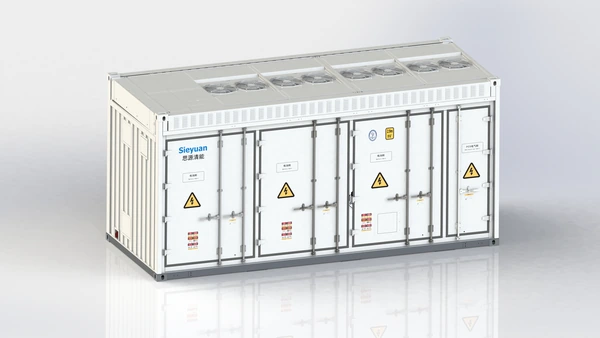
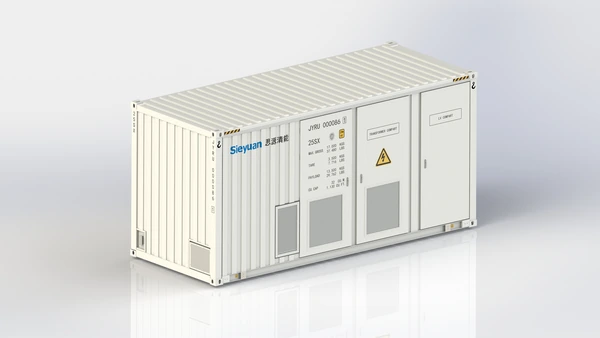
Sieyuan multi-medium energy storage unit: the energy storage cabin and electrical cabin are integrated in a single standardized container.
Sieyuan Electric's multi-medium energy-storage unit adopts a standardized container design with highly integrated internal components. Its configuration includes four main modules:
Energy-storage media
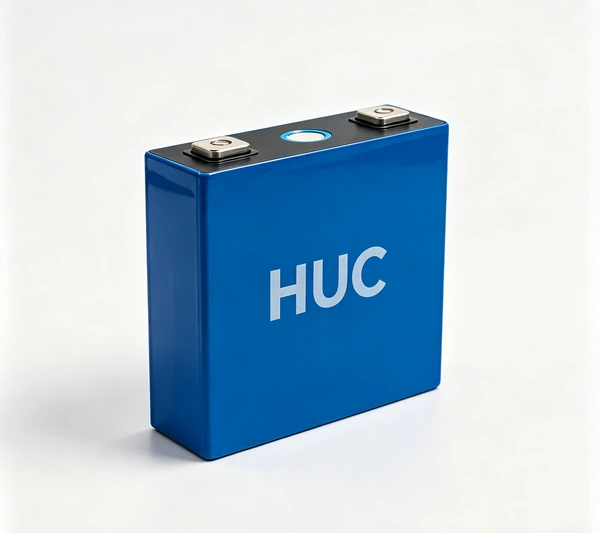
Electric Double-Layer Capacitors (EDLC), Hybrid Ultra-capacitors (HUC), and Lithium Iron Phosphate (LFP) batteries, combining different power and energy characteristics to meet different energy-storage requirements.
Power Conversion System (PCS)
Enables bidirectional DC-AC conversion and serves as the core interface between the energy-storage media and the power grid. It also supports grid-forming control.
Intelligent thermal management
A full liquid-cooling system controls internal temperature differences and maintains the storage components within their specified operating temperature range.
Secondary control, protection, and safety system
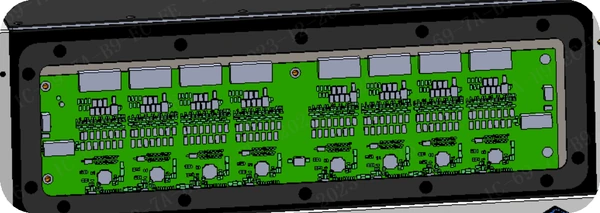
Comprises EMS, CMS, BMS, aerosol fire protection, and explosion-proof ventilation to support coordinated operation, equipment protection, and system safety.
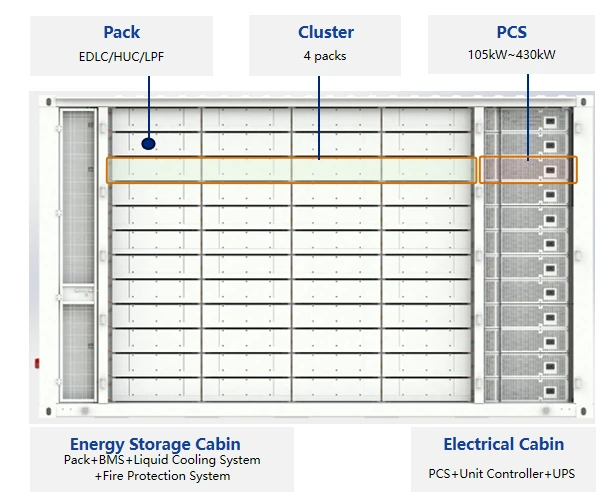
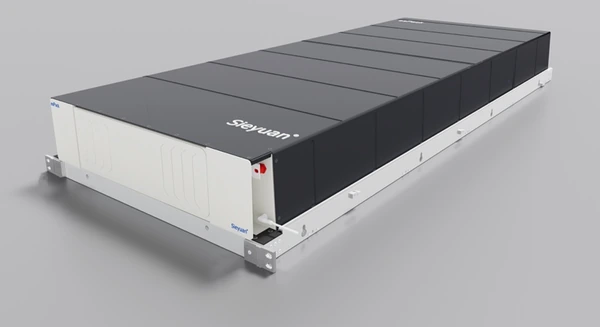
Inside the unit: packs (EDLC/HUC/LFP) form clusters of four, each cluster with its own 105–430 kW PCS; the electrical cabin houses the PCS, unit controller and UPS.
2. Typical Application Scenarios of Energy-Storage Systems
Energy storage is not a universal solution for every power-system challenge. Different technologies and configurations address different operating requirements. Multi-medium integrated energy-storage systems can be applied in the following scenarios.
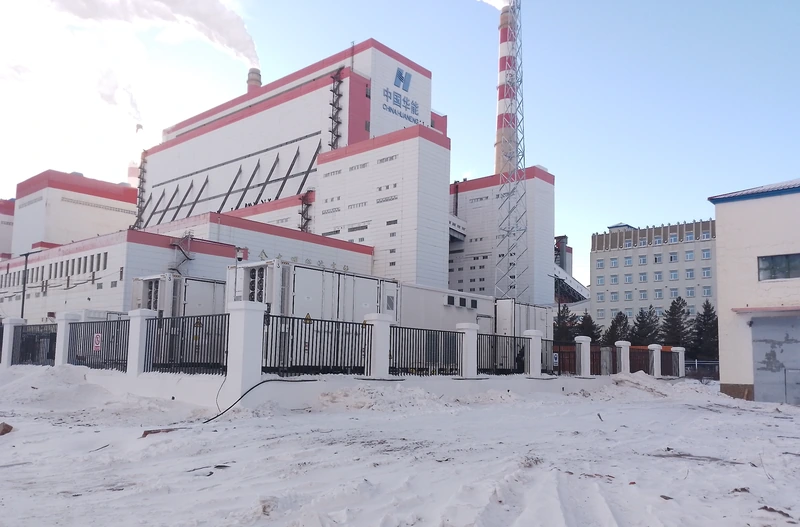
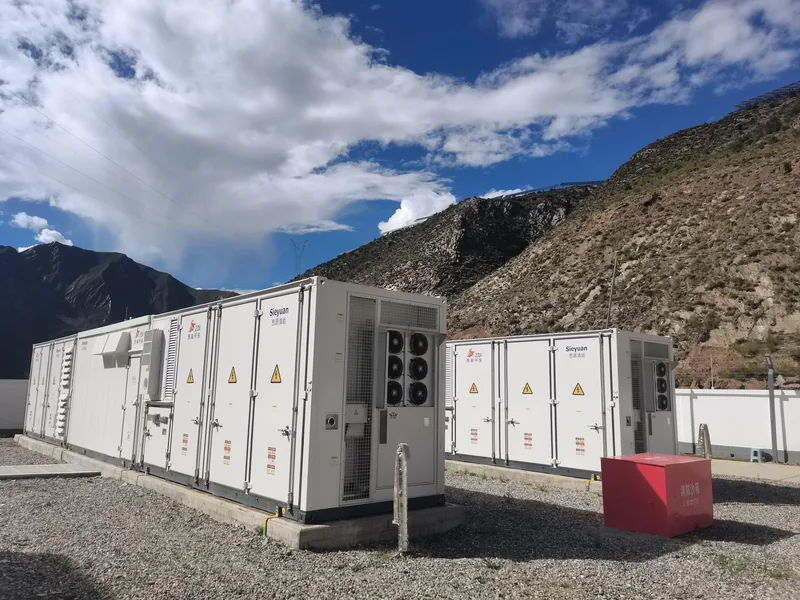
For demanding environments, Sieyuan Electric's relevant system configurations support:
High-altitude operation
Up to 4,000 m.
Corrosion protection
C5-M requirements for coastal environments with heavy salt fog.
Wide temperature range
Ambient temperatures from -40°C to +50°C (>45°C derating).
Actual operating limits and derating requirements depend on the product configuration and project conditions.
3. Why Do Grids and Customers Prefer Multi-Medium and Grid-Forming Energy Storage?
With the large-scale integration of renewable energy, power grids may exhibit low-inertia and weak-grid characteristics. Traditional grid-following energy-storage systems follow existing grid voltage and frequency references, while grid-forming systems can establish and regulate their own voltage and frequency references to actively support grid operation through control implemented in the PCS.
At the same time, standalone lithium-ion batteries may experience accelerated degradation under frequency-regulation conditions involving frequent, high-power fluctuations. Multi-medium energy storage addresses different power and energy requirements by combining storage technologies with complementary characteristics.
Sieyuan Electric's multi-medium energy-storage architecture combines lithium-ion batteries with EDLC or HUC storage units through AC coupling. The storage units are independently deployed and operate under unified control and dispatch.
The different storage media perform complementary roles:
EDLC
Provides rapid, high-power response for short-duration requirements and frequent charge-discharge cycles.
HUC
Supports minute-level power requirements, balancing power and energy delivery.
LFP batteries
Provide longer-duration energy storage and transfer.
Under coordinated control, capacitive storage media respond to short-duration, high-power demands, while lithium-ion batteries support longer-duration operation. This arrangement helps reduce peak current stress on lithium-ion batteries and smooth their power profile.
Combined with grid-forming control algorithms implemented in the PCS, this architecture enables the energy-storage system to actively establish and regulate grid voltage and frequency while meeting different power and energy requirements.
4. How to Choose the Right Energy Storage System
Selecting an appropriate energy-storage system requires matching storage-media characteristics with project requirements. Key considerations include energy density, charge/discharge rate, cycle life, response time, and operating scenarios.
4.1 Comparison of Different Energy-Storage Technologies
| Comparison Dimension | Lithium-Ion Battery System | EDLC Supercapacitor System | HUC Hybrid Ultra-capacitor System | Multi-Medium Integrated System |
|---|---|---|---|---|
| Energy Density | High (hundreds of Wh/kg) | Very low (~9 Wh/kg) | Relatively high (~140 Wh/kg) | Flexible configuration for short- and long-duration requirements |
| Charge/Discharge C-Rate | 0.5C–1C (hour-level) | >120C (second-level) | >10C (minute-level) | Covers requirements from seconds to hours |
| Cycle Life | 4,000–10,000 cycles | >1,000,000 cycles | >150,000 cycles | Combines complementary characteristics of different media |
| Response Time | <20 ms | <20 ms | <20 ms | Millisecond-level active support |
| Core Advantages | High energy density and long-duration storage | Very high power density and long cycle life | Balanced energy and power characteristics | Complementary performance for multiple grid requirements |
| Applicable Scenarios | Peak-valley arbitrage and long-duration storage | Short-duration, high-frequency regulation and voltage-sag mitigation | Thermal-storage joint frequency regulation and renewable power smoothing | Complex grids, grid-forming support, and AI data centers |
Note: The values shown represent typical operating conditions. Response time should be evaluated according to its definition and measurement level, including the storage cell, PCS, and complete system. These values should not be directly compared without consistent test conditions.
4.2 EDLC: Electric Double-Layer Capacitors
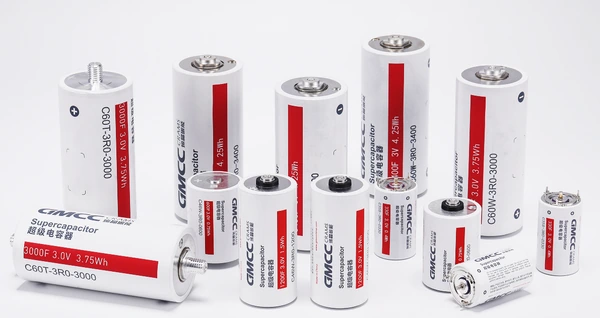
EDLC stores and releases energy through a physical process rather than chemical reactions. With a cycle life exceeding one million cycles, it is suitable for short-duration, high-frequency applications requiring rapid response.
4.3 HUC: Hybrid Ultra-capacitors
HUC combines electrochemical and physical energy-storage mechanisms. Its single-cell specification reaches 80 Ah, with an operating voltage range of 2.5–4.0 V. It provides a balance between power and energy characteristics and is suitable for frequency-regulation applications.
5. Technology Development Trends for Energy-Storage Systems
The development of energy-storage systems is increasingly focused on grid support, system integration, thermal management, and active safety.
5.1 Grid-Forming Technology
Energy-storage systems are evolving from passively following grid conditions toward actively establishing voltage and frequency references. Grid-forming capabilities, including inertia support and black start, are increasingly relevant to power systems with high renewable energy penetration.
5.2 Modularization and Cluster Control
Cluster-level PCS configurations allow individual battery or supercapacitor clusters to operate under separate charge and discharge control. This architecture can reduce circulating-current risks between clusters, improve equipment utilization, and simplify operation and maintenance.
5.3 Liquid-Cooling-Oriented Thermal Management
Intelligent liquid-cooling systems, combined with optimized flow-channel designs, address the different heat-dissipation requirements of energy-storage media and PCS equipment. Effective thermal management helps control temperature differences within energy-storage containers.
5.4 Active Safety and Multi-Level Fire Protection
Energy-storage safety is moving beyond passive fire suppression toward early detection and coordinated protection. Aerosol fire suppression, combustible-gas detection, and explosion-proof ventilation can work together to support early warning and linked safety responses.
6. Core Advantages of Sieyuan Electric
6.1 Improved Full-Lifecycle Economics
Sieyuan Electric's energy-storage solution adopts an AC-DC integrated design and modular unit arrangement to improve space utilization and reduce project construction requirements.
A single energy-storage unit can reach 6.31 MW / 12.62 MWh, with land occupation reduced by 20%. The integrated civil-layout scheme reduces the quantities of foundations and cable trenches by approximately two-thirds, lowering civil-engineering investment by 20%.
The cluster-controlled architecture enables a depth of discharge (DoD) of up to 95–100%, increasing discharged energy per cycle by 5–10%. DC-side decoupling allows only faulty clusters to be shut down when failures occur. The non-disconnection design reduces full-lifecycle outage losses by 95%, with overall system availability exceeding 99%.
The design also simplifies operation and maintenance through features including:
✓No DC combiner cabinets or high-voltage boxes.
✓Fool-proof PACK short-circuit connections.
✓Externally detachable BMUs.
✓PACK external recharging without disassembly.
✓Standardized modular PCS.
✓Hot-pluggable liquid-cooling connectors.
Actual economic results depend on project design, operating conditions, and the comparison baseline.
6.2 One-Stop Solution: Maximize Factory-Side Work, Minimize On-Site Workload
Sieyuan Electric provides an integrated solution covering core components, system integration, and project delivery.
Self-developed and manufactured components
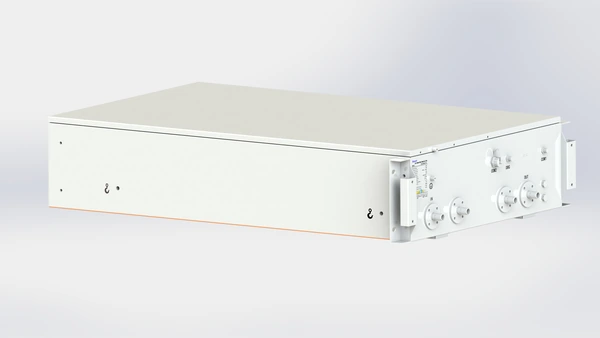
EDLC, HUC, PACK, BMS, PCS, EMS, unit controllers, and coordination controllers are independently developed and manufactured. This scope does not include LFP battery cells.
Simplified installation
Batteries and PCS are integrated within a single container. AC and DC assembly is completed at the factory before the integrated unit is transported to the project site, shortening on-site installation time by 50%.
Faster commissioning
AC-DC integrated pre-commissioning is completed at the factory. Drawing on grid-connection commissioning experience with State Grid and China Southern Power Grid, the solution reduces on-site commissioning time on the 10/35 kV low-voltage side by 50%.
6.3 Multi-Dimensional Safety Protection
The system adopts a multi-layer safety design covering electrical protection, structural isolation, cluster-level protection, and fire safety.
DC circulating-current control
The cluster-controlled architecture uses one PCS for each cluster to isolate the DC sides and address circulating-current risks between clusters.
Electrical safety
DC short-circuit current is limited to 10 kA, compared with short-circuit-current levels of hundreds of kA in conventional architectures.
Cluster-level protection
Overcurrent, undervoltage, overvoltage, and SOC protection are independently calculated at the cluster level, with protection provided by both the BMS and PCS.
Structural safety
A physical fire-resistance partition separates the battery and electrical compartments.
Fire protection
Container-level and PACK-level aerosol fire-suppression systems are combined with independent smoke detection and coordinated control.
6.4 Grid-Friendly Technology: 30 Years of Grid-Equipment Experience
With 30 years of experience in grid equipment, Sieyuan Electric integrates fast communication, power control, and grid-support functions into its energy-storage solutions.
Fast response
LVDS high-speed communication operates at the microsecond level, enabling 1 ms communication response at the power-control layer and 20 ms fast power response. These capabilities support inertia response, primary and fast frequency regulation, and dynamic voltage regulation.
Flexible operating modes
The system supports both grid-following and active grid-forming modes to accommodate different grid conditions.
Advanced functions
Additional capabilities include oscillation damping, negative-sequence compensation, and black start for more demanding grid applications.
7. Conclusion
Energy-storage systems play an important role in maintaining grid stability and improving renewable energy integration. They also support the power-supply and regulation requirements of zero-carbon factories, data centers, and other dynamic-load applications. Selecting the right solution requires a comprehensive assessment of storage media, grid-forming capabilities, operating conditions, safety, and lifecycle economics. By matching storage technologies to project requirements, energy-storage systems can provide more effective power support and energy management.
Sieyuan Electric focuses on the R&D, manufacturing, and system integration of multi-medium energy-storage systems for new-type power systems. With independent R&D capabilities in core power-conversion equipment and management systems, Sieyuan Electric provides integrated services covering product development, manufacturing, project delivery, and full-lifecycle intelligent operation and maintenance. Its solutions address power-supply and flexible-regulation requirements across main grids, large-scale renewable energy bases, data centers, and zero-carbon factories.
Visit the official Sieyuan Electric website to explore its product portfolio and engineering solutions.